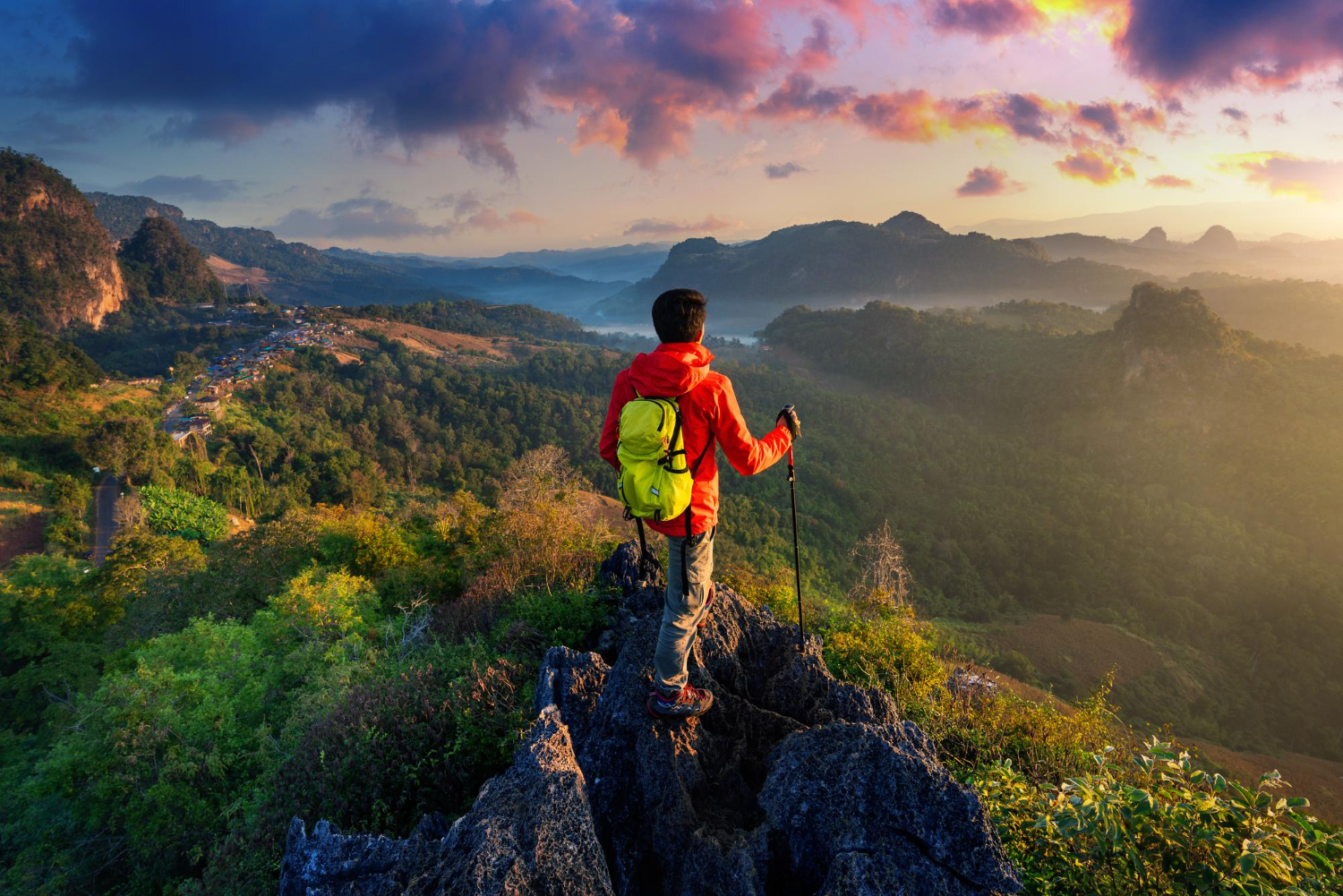
In Maharashtra, the monsoon season brings a variety of adventures. Everyone is tempted to leave the concrete metropolis and seek outdoor activities with lush green scenery, glittering waterfalls, and a chill in the air. The nicest aspect is that everyone will find something to enjoy here. Choose from leisurely strolls along low valleys, simple climbs, secret forts, or heart-pounding hikes up steep mountains.
1. Bhivpuri Waterfalls, Karjat
Duration: 1 day; Maximum Elevation: 115 Feet; Ideal Travel Period: June to September; Difficulty: Easy
To get to this gorgeous waterfall surrounded by verdant slopes, climb up the foothills of the Bhivpuri village past meandering streams and grazing animals. It is good for family treks because the ascent is quite straightforward. As soon as you reach the summit, take in Bhivpuri’s natural beauty while enjoying lunch at one of the adjacent food shacks or listening to the waterfall’s rushing water. Take a soak in the gushing water after you walk or rappel down. Additionally, you could go to adjacent attractions like Sai Baba temple and the hydroelectricity plant and dam at Bhivpuri.
2. Karnala Fort, Raigad
Duration: 1 day; Maximum Elevation: 1,500 feet; Ideal Travel Period: June to April; Difficulty: Easy
The Karnala Fort is the ideal location if you want to relax in a historically significant setting surrounded by nature. As you approach the Karnala Bird Sanctuary, songbirds like the paradise flycatcher and magpie robin will welcome you. Choose between the marked motorable trail and the rough track that encircles the sanctuary while ascending. At the base of the 14th-century fort, both routes come together. Make sure to stop at the Pandu Tower, which is located in the middle of the fort’s upper level. This thumb-shaped, 125-foot-tall basalt tower served as the fort’s watchtower in the past.
3. Peb Fort, Matheran
Duration: 1 day; Maximum Elevation: 2,050 feet; Ideal Travel Period: July to September; Difficulty: Easy
Peb or Vikatgad Fort, a lesser-known hiking location close to Matheran, is perfect for those seeking a peaceful vacation. Beginners will love this trail because it follows a simple path and has monkeys to show them the way. The fort’s cave offers expansive views of the Matheran range. While camping in the caves at night, you can also learn more about the hills.
4. Duke’s Nose, Khandala
Duration: 2-4 hours; Maximum Elevation: 3,200 feet; Ideal Travel Period: July to September; Difficulty: Easy
This well-known trip location, which resembles the pointy nose of the Duke of Wellington, features a steep cliff with a flat top that allows for a stunning viewpoint. There are two ways for each hiker to reach the summit, one from Kurvande hamlet and the other from Khandala station, both taking around four hours. Any path you choose will provide you with sweeping views of Khandala and the Sahyadri peaks. You may add a little more excitement to the journey by rappelling and rock climbing down while admiring the misty highlands. You can also participate in the slacklining festival in October.
5. Devkund Waterfall, Bhira Village
Duration: 1 day; Maximum Elevation: 2,700 feet; Ideal Travel Period: August to November; Difficulty: Easy
The Devkund Waterfall, which cascades from a height of 80 feet, is hidden deep among the trees that surround the Bhira Dam. After a brief rise, the trail enters the thick woodlands and rough trails after beginning along the dam’s banks. You could refuel at the tea and food stalls along the path of the ascent leaving you exhausted. A tiny area of the pond below the falls is also swimmable. However, exercise caution because some parts of the pond are 60 feet deep. Even better, you could set up a tent and go camping nearby.
6. Takmak Fort, Palghar
Duration: 1 day; Maximum Elevation: 2,000 feet; Ideal Travel Period: June to September; Difficulty: Medium
During the monsoon, you can find a piece of natural beauty at every step on the route to the 12th-century fort, from colorful rice paddy fields to meadows of starflowers in full bloom. Along the way, there are also nuggets of history to be found in the broken pieces of the Takmak Fort. However, be cautious to go on your excursion with a guide because the winding trails might cause people to get lost. Because the ridges near the end are small and have loose rocks that can be difficult to climb, this hike would benefit from some preparation ahead.
7. Prabalgad, Panvel
Duration: 4 hours; Maximum Elevation: 2,300 feet; Ideal Travel Period: June to September/October to December; Difficulty: Medium
It can be soothing to climb Prabalgad’s uneven and rocky slope, but the rain makes the rock-cut steps quite slick. In the monsoon, it is better suited for experienced trekkers as the crowding on the small steps makes it a bit difficult to trek. The plateau has a bird’s eye view of Matheran and is home to numerous lizards, snakes, and many species of birds.
8. Salher Fort, Nashik
Duration: 2 days; Maximum Elevation: 5,140 feet; Ideal Travel Period: August to February; Difficulty: Hard
The pyramid-shaped Salher fort, one of the most famous forts of the Maratha Empire and the second-highest hill in Maharashtra can be climbed from one of three villages: Waghambe, Salher, or Maldar. Similar to Prabalgad, the trip is a remarkable adventure despite the slick pathways and difficult-to-climb chiseled steps. Even more so, the Salota Fort, the Salher’s twin fort, is directly across from it. The low point between the two peaks is separated by a saddle. A Parshuram temple is located at the summit’s highest point.
9. Kalsubai Peak, Igatpuri
Duration: 6 hours; Maximum Elevation: 5,400 feet; Ideal Travel Period: June to August; Difficulty: Medium
Kalsubai, Maharashtra’s tallest peak, is arguably the state’s most well-known trekking destination. There are two parts to the expedition to the cloud-covered top. Except for a few rocky parts, the first section through the farmlands is rather relaxed. Steel ladders and rails help with the steep rise that makes up the second portion. Every time you turn on the peak, a fresh view is revealed. Many people set up a tent at the peak of the hill to see the stars at night and witness the sunrise in the morning.
10. Ratangad Fort, Ahmednagar
Duration: 1 day; Maximum Elevation: 4,255 feet; Ideal Travel Period: June to September/October to December; Difficulty: Medium
After scaling Kalsubai, you may travel to Ratangad, the jewel of the Sahyadris, if you felt like a further adventure. Ratangad, a fort on the Kalsubai mountains at the bank of the Bhandardara River, is around 400 years old and has two caves, four gates, and a natural rock pinnacle known as Eye of the Needle for trekkers to explore. With rare small spurs and slight ascents, the trail is primarily flat. The fort’s surrounding gardens are a sight to behold.
11. Sudhagad Fort, Pali
Duration: 2 days; Maximum Elevation: 5,175 feet; Ideal Travel Period: June to September; Difficulty: Medium
Both novice and experienced hikers will enjoy the amazing experience of ascending this remote hill fort. Begin your ascent, on the well-defined asphalt roads that climb up to a stone walkway. As soon as the walkway comes to an end, you will arrive at a temple with a huge tower in its courtyard. The main gate, the Mahadarwaja, and the neighboring lakes are what draws the majority of visitors on this trek.
12. Torna Fort, Pune
Duration: 2 days; Maximum Elevation: 4,603 feet; Ideal Travel Period: August to February; Difficulty: Hard
Expect to traverse a lot of streams and ridges on the thrilling and difficult trip to Torna Fort. There are wide meadows filled with vibrant yellow flowers that provide some relief while you exert yourself on the upward road. The Torna Fort, once known as Prachandagad, has a rich history. At the age of 16, Chhatrapati Shivaji Maharaj conquered it as his first fort. Go to the summit as soon as possible, to have enough time to immerse in the views of the surrounding forts and dams. As per the guidelines, you should depart by 5 PM. You can treat yourself to mouthwatering Maharashtrian cuisine at the Velhe Village at the base on the way back.
13. Harishchandragad, Ahmednagar
Duration: 2 days; Maximum Elevation: 1,424 feet; Ideal Travel Period: August to February; Difficulty: Hard
The Khireshwar route, also known as Pachnai, is the safest route up Harishchandragad during the rainy season. Traverse the rice fields, Pimpalgaon Joga Dam, and through the little caves, to get to the top of the fort where you may have a great supper and watch the sun set behind the two valleys, Closer to the top, visibility could be a problem, but the metal rails and ladders protect you from harm. Do not forget to take shots from the Konkan Kada (cliff), where you may occasionally get to experience a circular rainbow.
14. Jivdhan Fort, Pune
Duration: 2 days; Maximum Elevation: 3,757 feet; Ideal Travel Period: August to February; Difficulty: Hard
The hill fort of Jivdhan, located in Pune close to the village of Ghatghar, has presented several challenges to hikers. You would require a guide to help you get around the jungle when you set out on this journey. To undertake the difficult climb to the pinnacle, you also need the proper climbing tools. Novice trekkers would need to travel to the Kalyan gate to use the carved rock stairs with hooks fastened to the walls to aid the climb. The fort offers captivating views of the forts at Harishchandragad, Chavaand, Ratangad, and Naneghat as well as unexplored storage areas, water tanks, and cisterns.
15. Harihar Fort, Nashik
Duration: 2 days; Maximum Elevation: 3,676 feet; Ideal Travel Period: June to August; Difficulty: Hard
The Harihar Fort was constructed in a very unusual location, which adds to its difficulty. It is perched atop a triangular prism rock that is 90° inclined vertically. You must climb 117 stairs, go beneath an overhang with a sharp drop, and then climb another steep staircase to reach the fort. You can see the plateau and a small raised level right at the entrance. The plateau has a charming pond with tiny idols of the gods Hanuman, Shiva, and Nandi. When we reach the upper level, we see a two-room palace that has space for about 12 people. The Sahyadri range peaks may be seen from every angle. Don’t forget to check out the “Scottish Kada,” a vertical drop that bears Doug Scott’s name, the mountaineer who made the first ascent.