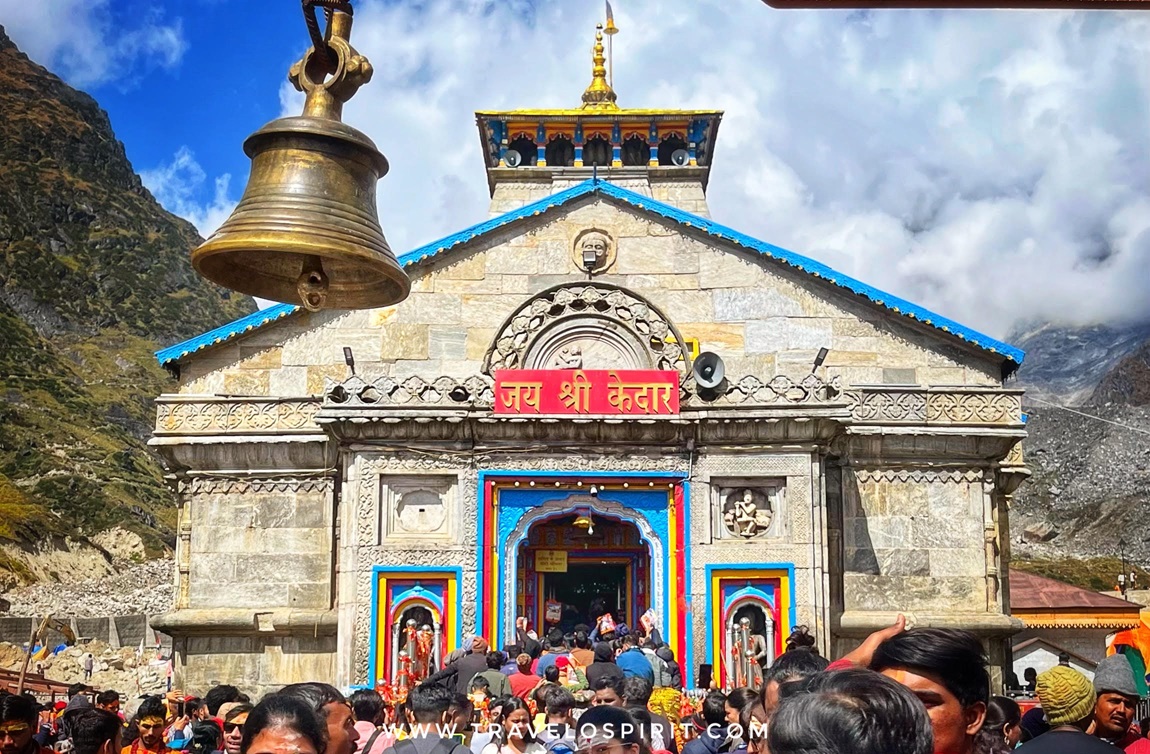
Kedarnath Yatra is not a holiday destination; rather, it is a place of pilgrimage. You must prepare yourself both physically and mentally before beginning the yatra. The majority of information provided online is more or less the same and only the tip of the iceberg. As most of you reading this article, Kedarnath was always in my bucket list. So, I finally decided to visit this year. I spoke with a few of my travel companions who had visited Kedarnath because I didn’t find the information on the internet to be very helpful, and accordingly I planned the rest of my trip. I decided to undertake my Yatra in October because it is relatively less busy than the peak months of April to June, when Kedarnath is quite crowded.
All of my research and time spent in Kedarnath inspired me to write this FAQ. I’m hoping it will be helpful to you. The majority of the questions that came to mind have been answered; however, if there are any that I have missed, please let me know in the comments section or send an email to travelospirit@gmail.com, or find me on Instagram at @readysteadytravel_ig and @travelospirit. Also, I’ll do my best to keep the frequently asked questions below up to date.
I'll begin by giving you all a brief overview of my schedule.
Day 0 – Overnight Train to Delhi from Mumbai (16hrs)
Day 1 – Delhi to Haridwar (5hrs)
Day 2 – Haridwar to Sitapur (9hrs)
Day 3 – Sitapur to Kedarnath (14hrs)
Day 4 – Kedarnath to Gaurikund (9hrs)
Day 5 – Gaurikund to Rishikesh (8hrs)
Day 6 – Rishikesh Day Tour
Day 7 – Rishikesh to Delhi Airport (6hrs) and back to Mumbai
Q 1. When are the doors to Kedarnath Temple open and closed for pilgrims?
The doors of Kedarnath Temple typically open on the auspicious day of Akshaya Tritiya (April end), which is decided on Mahashivratri by the priests of Omkareshwar Temple in Ukhimath. The closing day of Kedarnath Temple is fixed which is on Bhai Dooj, two days following Diwali.
Q 2. What time of year is best to visit?
The majority of pilgrims prefer to visit during the summer months, i.e. April to June, before the monsoon, when the weather is pleasant, and this is the primary reason why it’s so congested.
The second best time preferred by devotees is when the monsoon has receded which is only after mid September until the temple closing day.
Because the temple is open during the monsoon season, many devotees continue to travel on yatra in July and August, primarily because it is less crowded and the hotels are cheaper. However, due to the high risk of landslides and floods, it is best to avoid the yatra during this time.
Q 3. What is the procedure for registering?
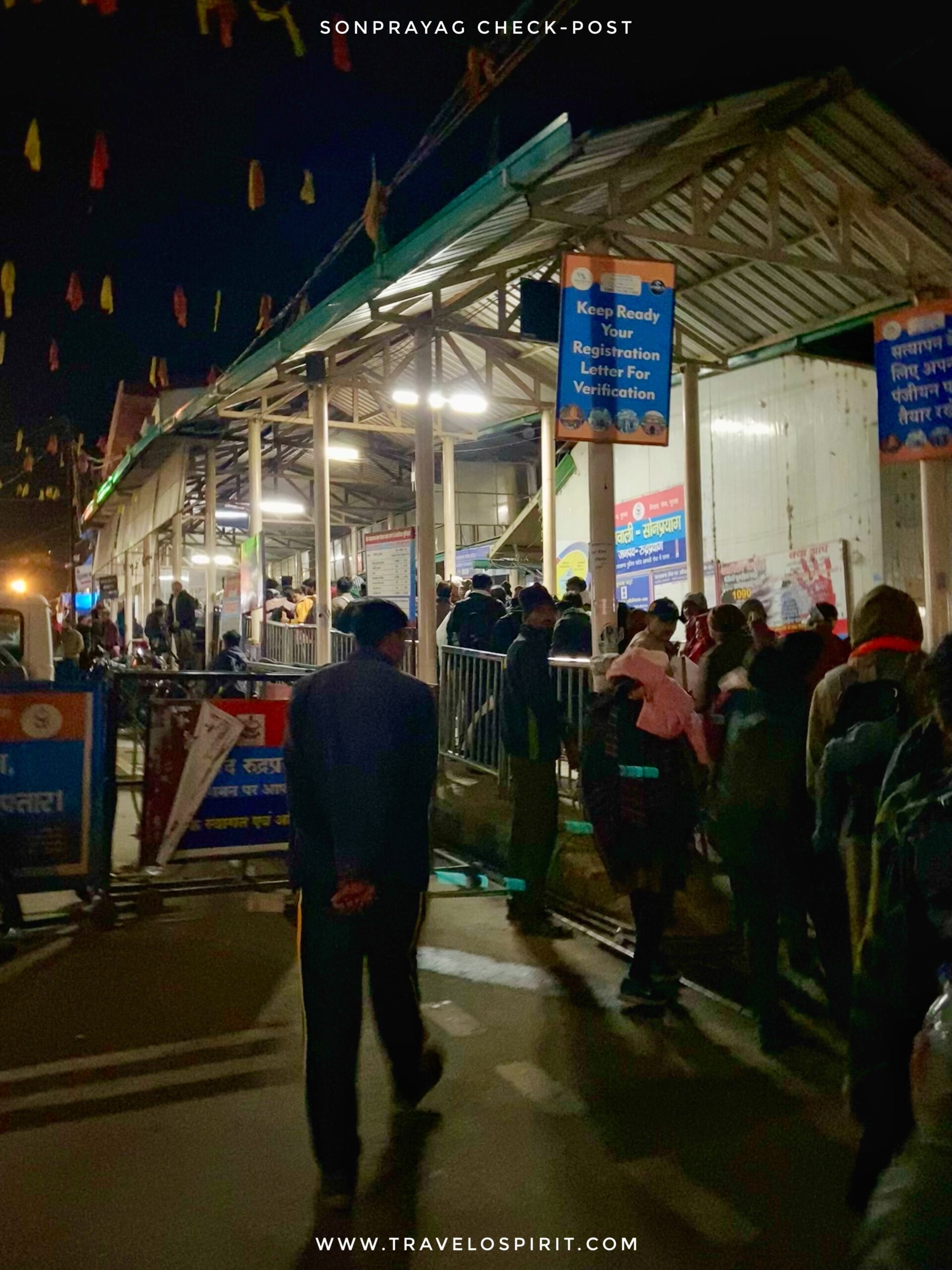
Kedarnath Yatra registration can be completed online or in-person at Sonprayag. The registration is first verified at Sonprayag and then again at the Kedarnath Temple grounds. If you have registered online, you can carry the electronic copy on your mobile device; there is no need to carry a hard copy.
Website for registration: https://registrationandtouristcare.uk.gov.in/
Q 4. Which is a better place to stay: Gaurikund, Sonprayag, Sitapur, or Guptkashi?
Allow me to start by telling you how far each place is from the Jeep Stand and Sonprayag Checkpost, which is where the journey begins.
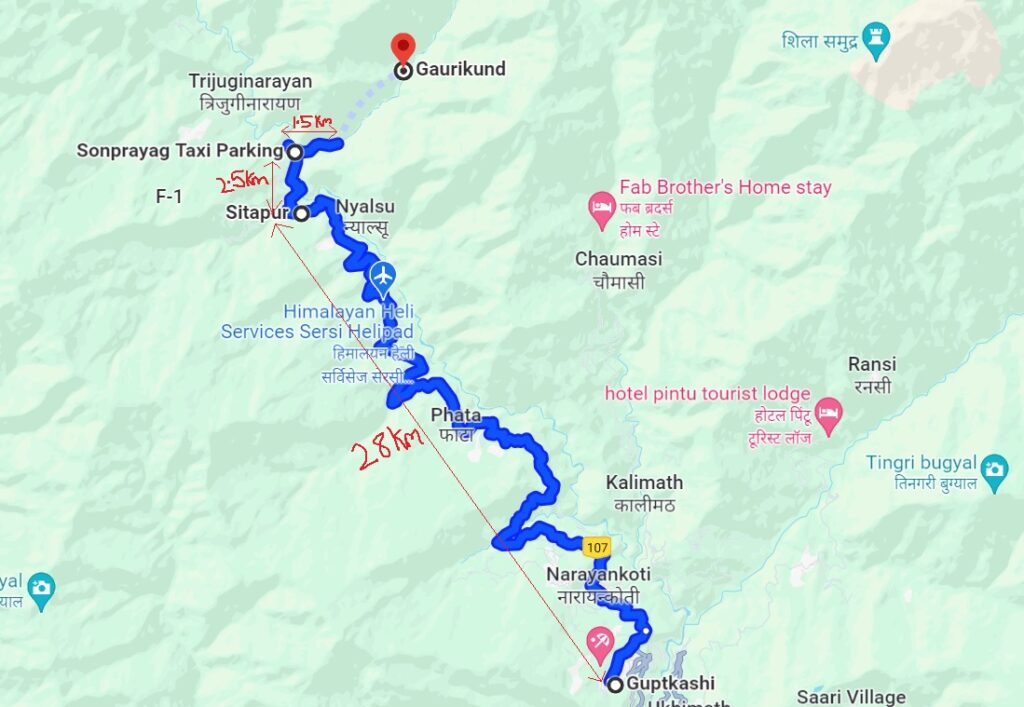
Map: Guptkashi – Sitapur – Sonprayag Jeep Stand – Gaurikund – Sonprayag Check-post
Guptkashi to Sonprayag Check-post – 28Km
Sitapur to Sonprayag Check-post – 2Km
Sonprayag Check-post to Sonprayag Jeep Stand – 500m
Sonprayag Jeep Stand to Gaurikund – 1.6Km
Guptkashi: As you can see from the above distance, Guptkashi is the farthest away. It takes about 1-1.5 hours to get to Sonprayag Check-post, where you must first have your registration checked before waiting in line for the Gaurikund Jeep in Sonprayag, which could take an additional half an hour to one hour depending on how long the queue is. Thus, around 2-2.5 hours will be needed in total before you begin your trek. Therefore, it is not a good idea to stay here.
Sitapur: Sitapur and Sonprayag are roughly 2 kilometers apart, making them both walkable distances. Since no vehicle is permitted further Sitapur, all buses and taxis would leave you off at Sitapur. Therefore, you have the option to remain in Sitapur or walk another 2 km to stay in Sonprayag. Both places have quite a few numbers of hotels. Before you start your hike in Gaurikund, allow one to one and a half hours for the taxi line and registration verification.
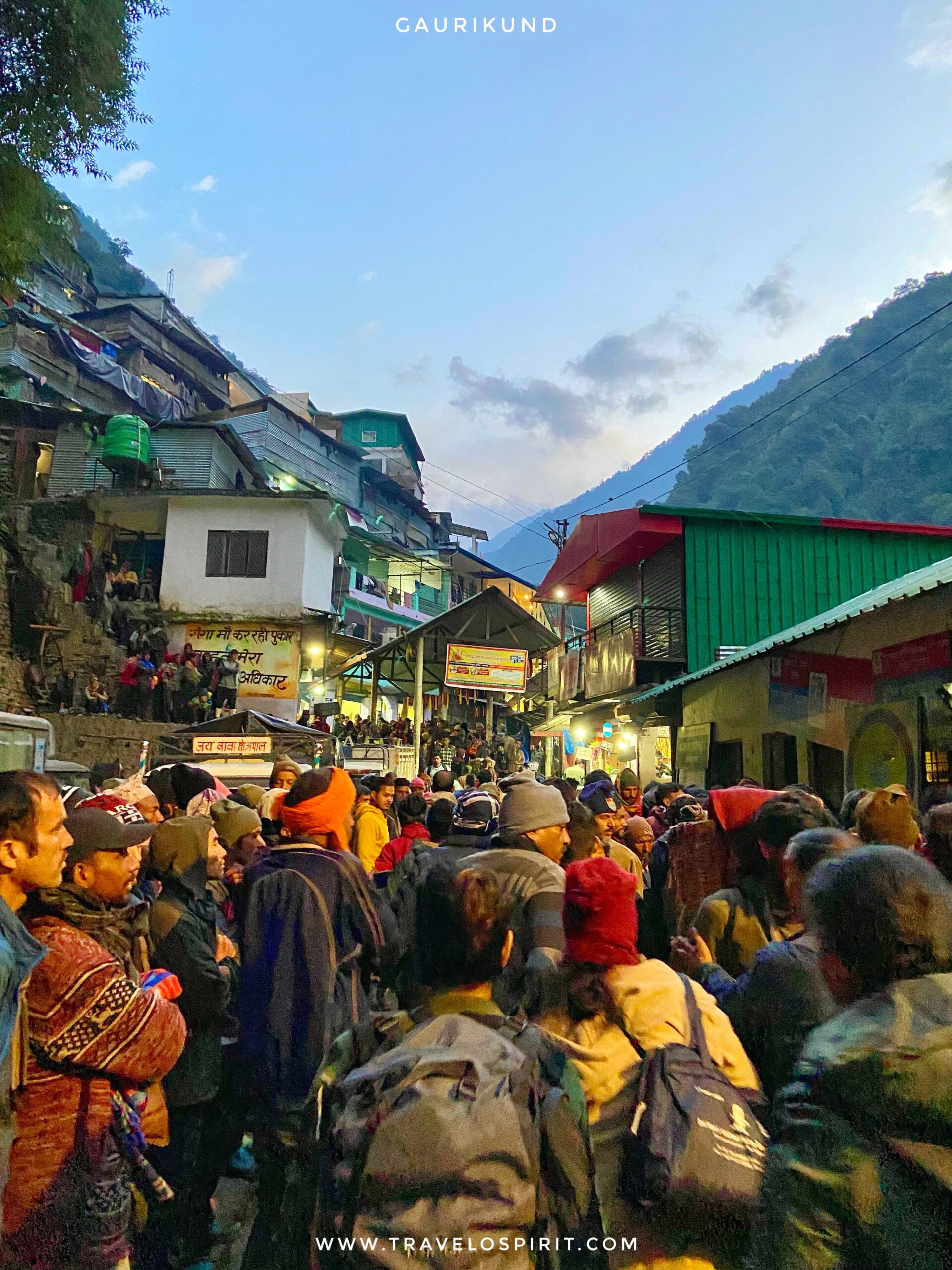
Gaurikund: Those who have been to Kedarnath Yatra would recommend staying here. The advantage of staying at Gaurikund is that you can immediately begin your trek because you will not have to wait in the Sonprayag taxi line or for registration scanning as this would be completed on the previous day itself. You can directly begin your trek in the early morning. In fact, there are more hotels, lodges, and dormitories in Gaurikund than in Sitapur and Sonprayag.
The majority of hotels in Guptkashi, Sitapur, Sonprayag, and Gaurikund are not available online because they only accept offline reservations. Therefore, you may be required to make reservations on-site. You may be able to find accommodations for as little as ₹1,000/- per night if you negotiate.
Q 5. How do you get to Gaurikund from Sonprayag?
Since vehicles are not permitted past Sitapur, you will need to walk to Sonprayag after you arrive there. Walking from Sitapur to Sonprayag is about 2 km and could take 10 to 15 minutes. First, complete the registration and checking process at Sonprayag. Step two is to enter the Sonprayag Taxi Line. You may find shared cabs at the taxi stop, which will cost you ₹50/-per seat and take you to Gaurikund, where your trek can begin.
Q 6. How much is the distance to Kedarnath Temple by trek?
This is a highly debatable topic; pilgrims claim Gaurikund is 22 kilometers away, while locals claim it is 16 kilometers. After the hike, we used our phones to determine that the distance and found that from Gaurikund it was approximately 16 kilometers and from Sonprayag, it was approximately 22 kilometers. So, 22, or 16? It depends wholly on your starting point.
Q 7. What are the difficulty level and the estimated time to reach Kedarnath Temple?
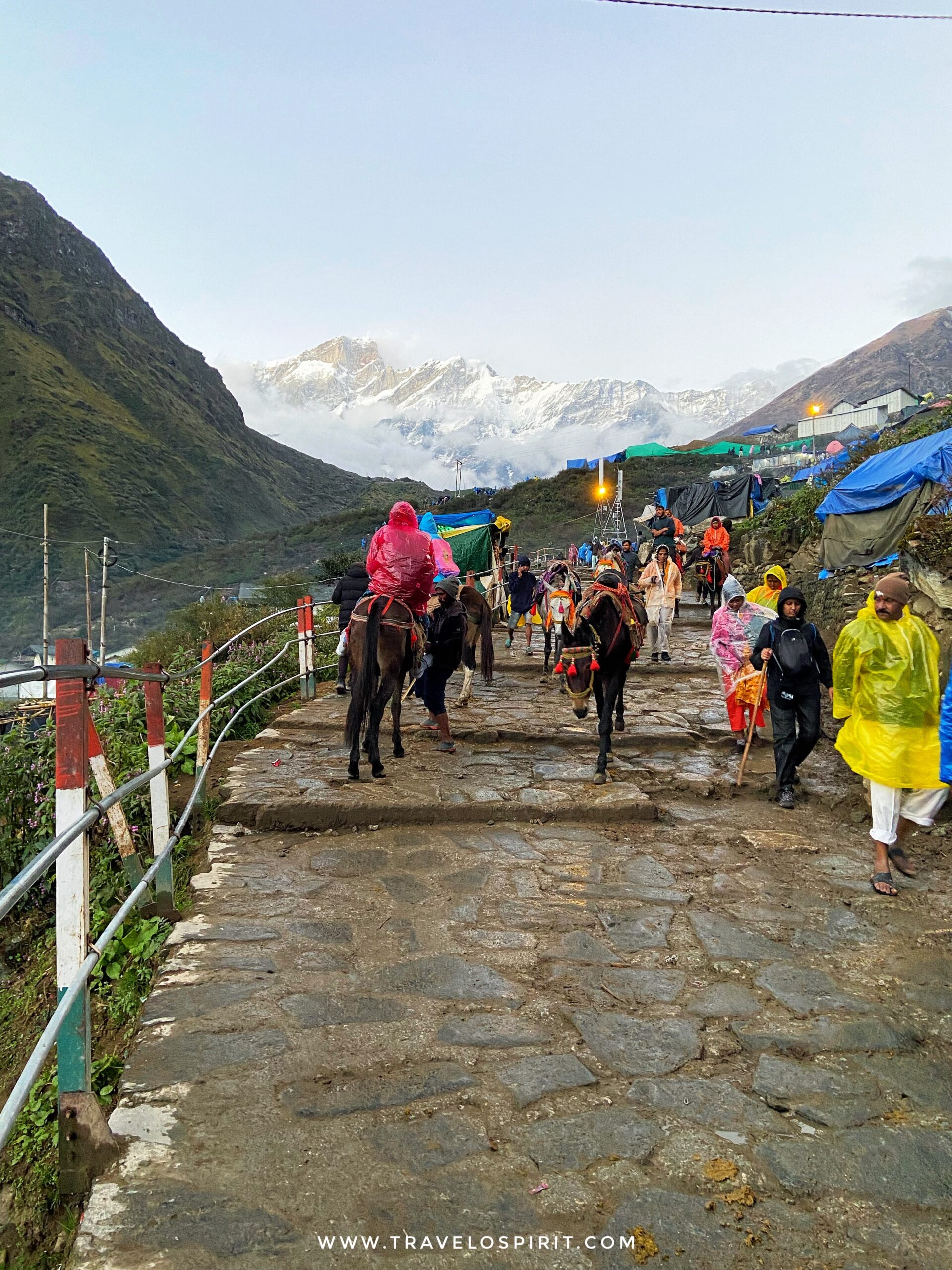
The difficulty of the Kedarnath Trek ranges from moderate to difficult. The entire trek is inclined upwards and you would hardly find any flat plane. The duration of the hike is wholly dependent on your fitness level. It could take between 8 and 14 hours. Horse, Basket, or Palki require approximately 6-7 hours.
Q 8. When should I begin my Trek?
As previously mentioned, the journey from Gaurikund could take anywhere between 8 and 14 hours, so you must begin your trek between 4 and 7 a.m. in order to reach the Temple by 6 p.m. and attend the evening aarti at 7 p.m.
If you are departing from Sitapur or Sonprayag, you can leave between 2:30 and 3:00 a.m. to arrive at Gaurikund by 4:30 or 5:00 a.m., where you can commence your trek, after completing all formalities.
In case you have stayed at Guptkashi then you have to depart even more early as you will take 1 hrs to reach Sonprayag and then 1-1.5 hrs for the formalities before you reach Gaurikund.
Q 9. What are the prices for Basket, Porter, Palki, and Ponies?
The cost of Ponies, Palki, Baskets, and Porters is revised annually by the government. They can be reserved at Prepaid Counters. For the current year 2023, the following tariffs apply:
Ponies:
Gaurikund to Kedarnath (14Km) – ₹2,300/-
Kedarnath to Gaurikund (14Km) – ₹1,500/-
Palki:
The price varies based on the individual’s weight.
Gaurikund to Kedarnath (16Km) – Starting from ₹4,550/- to ₹6,550/-
Kedarnath to Gaurikund (16Km) – Starting from ₹3,950/- to ₹5,850/-
Basket:
Again, the price differs according to the individual’s weight.
For round trek from Gaurikund to Kedarnath and back (32Km) – Starting from ₹4,900/- to ₹8,800/-.
Porter: The cost of a porter depends on the number of bags. But approximately it lies somewhere near to usual Pony and Basket charges. We were quoted ₹1,500/- to carry two bags on a basket. Obviously, they are very open to negotiation.
Important: Before employing a pony, a palki, a basket, or a porter, it is crucial that you verify their licenses and identification cards. There have been occasions in which porters went missing with the luggage.
Q 10. Should we bring children or not?
Due to the lengthy 12-hour journey, my personal opinion is a strong NO. While on trek, I saw 90% of children getting bored, irritated, complaining, and crying. I would strongly suggest not bringing kids below the age of 10. Children older than 10 can still manage. If you cannot avoid bringing your children, I recommend taking a helicopter instead of trekking.
Q 11. Does the trekking route provide restrooms and a sitting area?
There are plenty of benches along the path where you can rest. In addition, there are lots of shacks where you may stop, relax, and eat. There are restrooms every kilometer or so, and they’re in decent shape overall— neat, clean and hygienic.
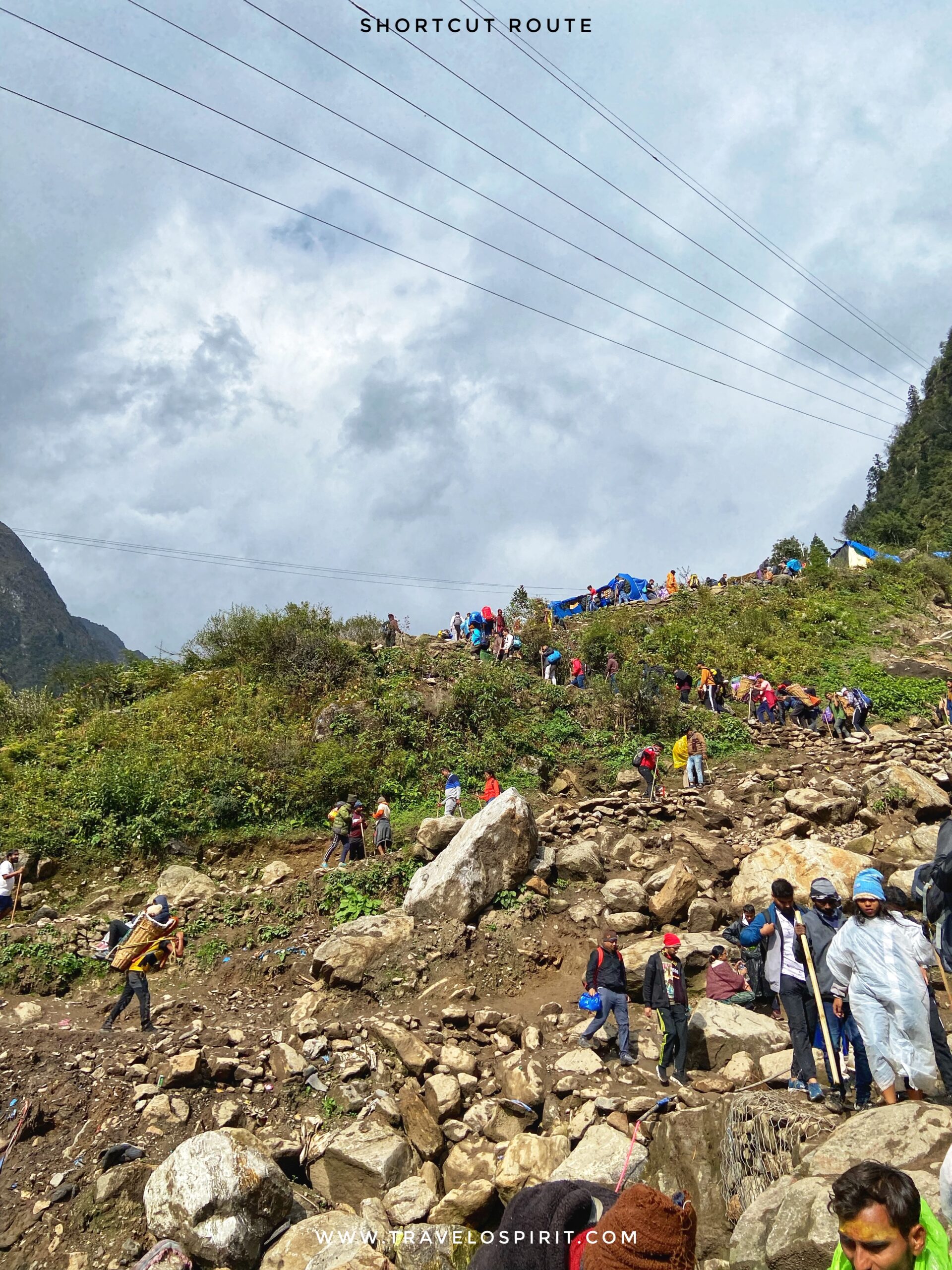
Q 12. Are there any hiking shortcuts that allow you to reach early?
There are roughly four to five shortcut routes that many individuals prefer over the primary route. However, it is not recommended because the ascent is very steep, rocky, and difficult; by the time you reach the end of the short cut, you will be very fatigued and have very little energy to continue trekking. Take the conventional route, which is slightly longer but does not drain your energy all at once. In addition, if it is raining, the shortcut path becomes slippery and you could get injuries.
Q 13. Does the trekking route have access to medical facilities?
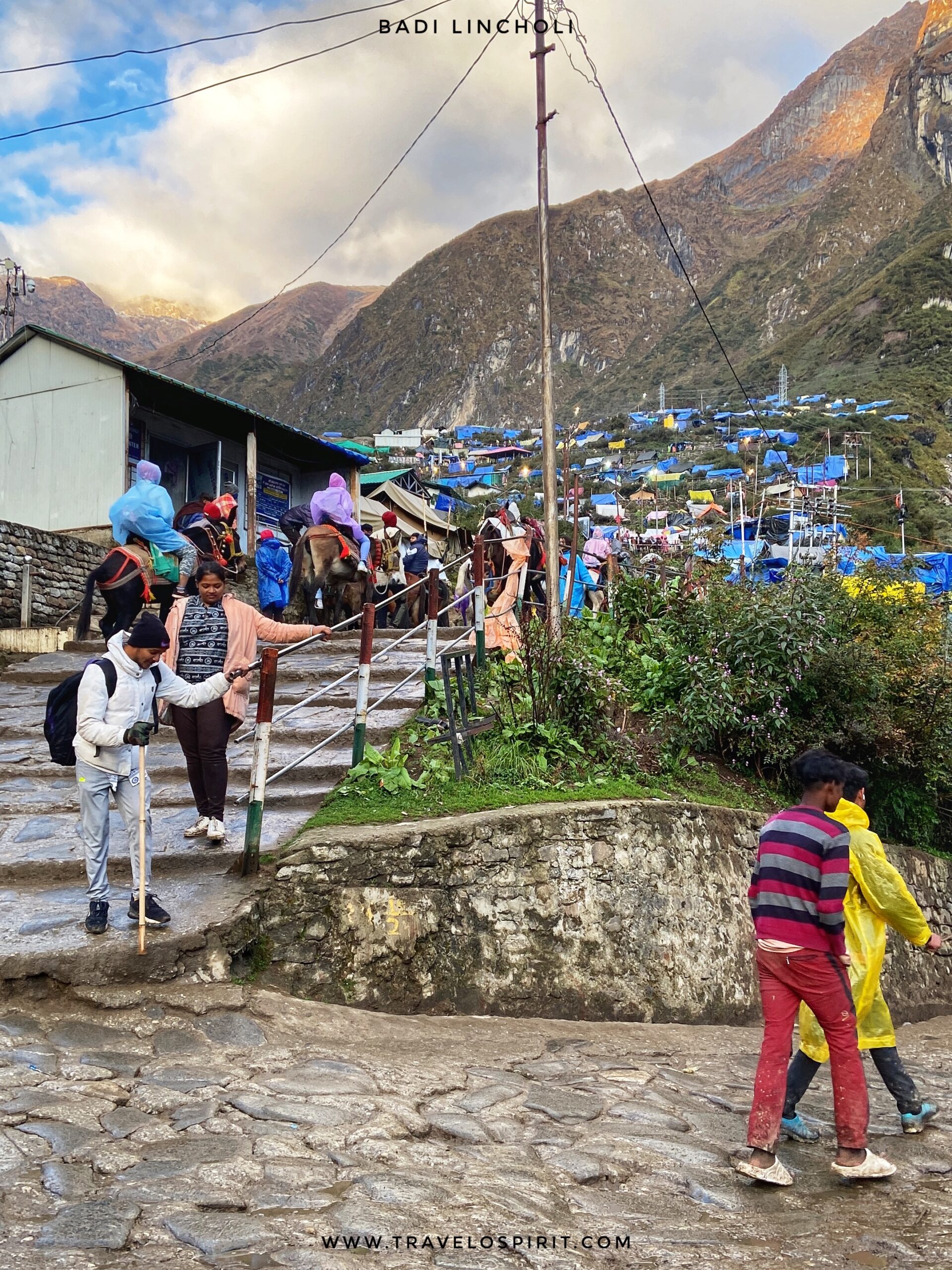
Though it was stated online that there are 10 to 11 medical camps along the trekking route, I could only find three: one at Choti Lincholi, one at Badi Lincholi, and one at Kedarnath Base Camp. I believe that during the summer months, when the number of pilgrims is highest, more camps are set up.
Q 14. Where in Kedarnath may I stay?
Camps and cottages are available from Badi Lincholi, but Nandi Base Camp 3 is the most convenient location to stay for early morning darshan, as it is only 500 meters to one kilometer from the Temple grounds.
The cost of the camps would range from ₹800/- to ₹4,000/- per night.
The hotels are priced between ₹4,000/- and ₹12,000/- per night.
The majority of camps and hotel rooms have four to twelve beds per camp/room.
The accommodations become more expensive as you get closer to the temple and also during the peak season.
Again, most of the hotels are not available online and accept only offline reservations, so you have to do on-site booking. You can negotiate with the owner for a suitable deal.
Q 15. What are temple hours?
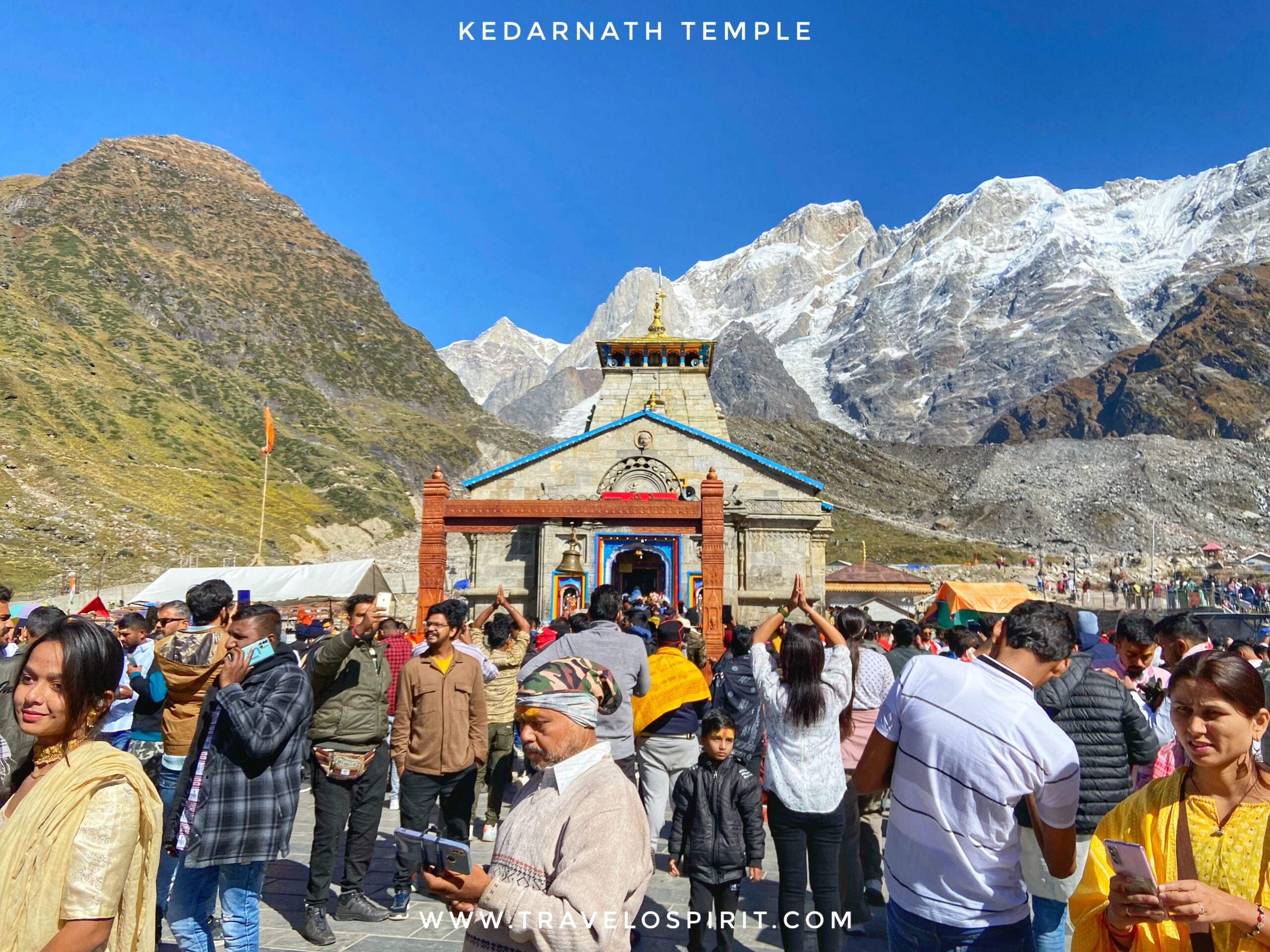
The Temple opens its doors for darshan at 6 a.m., when devotees may perform Ghee/Jal Abhishek. The entrance is closed for a two-hour break between 3 and 5 p.m. At 5 p.m., the entrances open, but no one is permitted to perform Abhishek; only distant darshan is allowed. At 7 p.m., evening aarti is performed post which the temple closes until next morning.
Q 16. When should I go for Darshan?
The ideal time for darshan is early in the morning. The Temple opens for darshan at 6 a.m., and people begin lining up as early as 3 a.m. It takes approximately three hours of waiting in line to receive darshan.
Q 17. What is the price of the VIP Darshan Pass?
The VIP Darshan Pass costs ₹2,100/- per individual, and VIP pass holders have a separate entrance. The Darshan will take around 30 to 45 minutes.
Q 18. What places are worth seeing in the vicinity of Kedarnath Temple?
- Amrit Kund (right behind the Temple)
- Bhimshila (right behind the Temple)
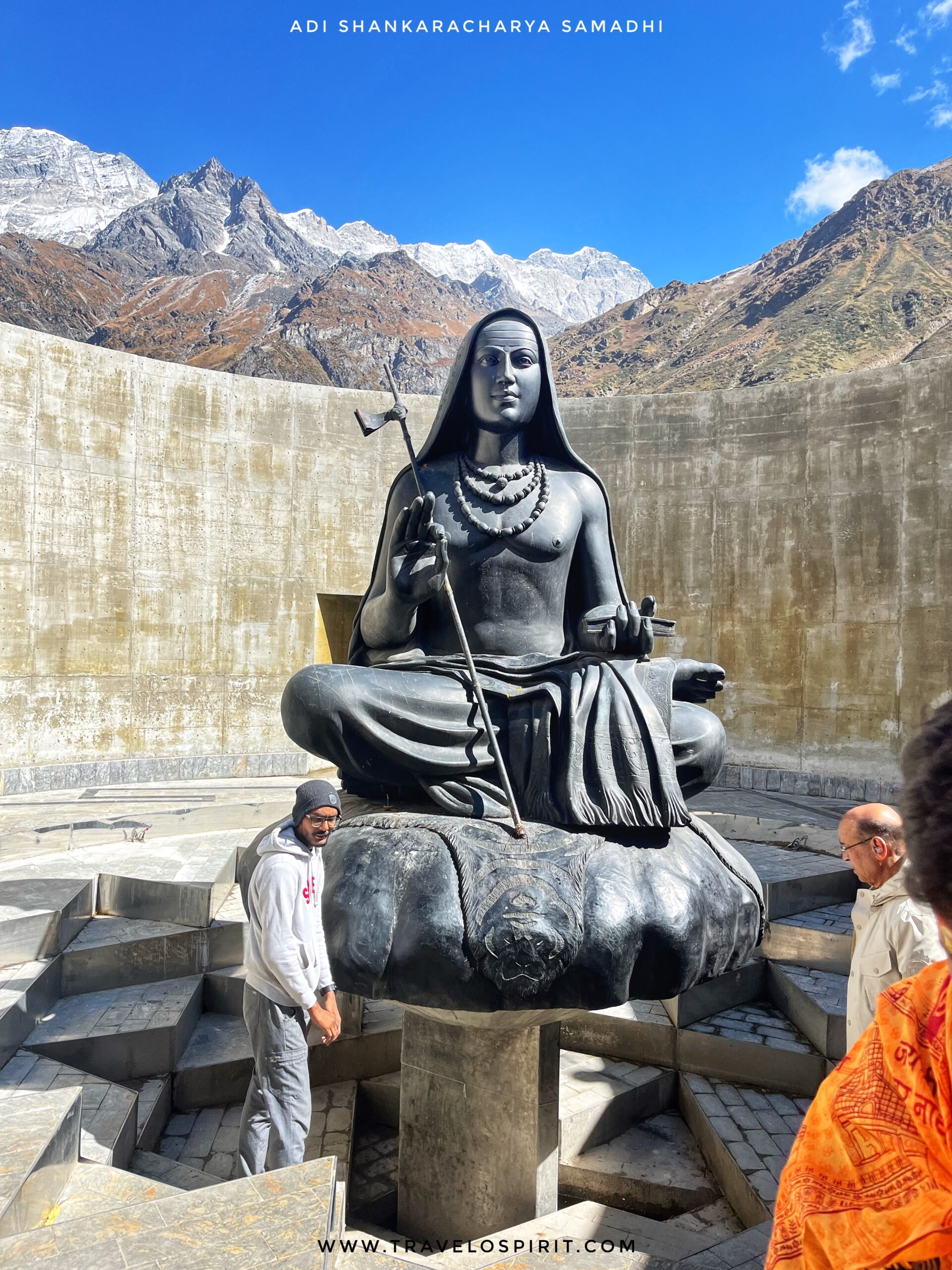
- Shankaracharya Samadhi (50m behind the temple)
- Retas Kund (200m from the Temple near the Iron Bridge)
- Rudra Cave (500m Trek)
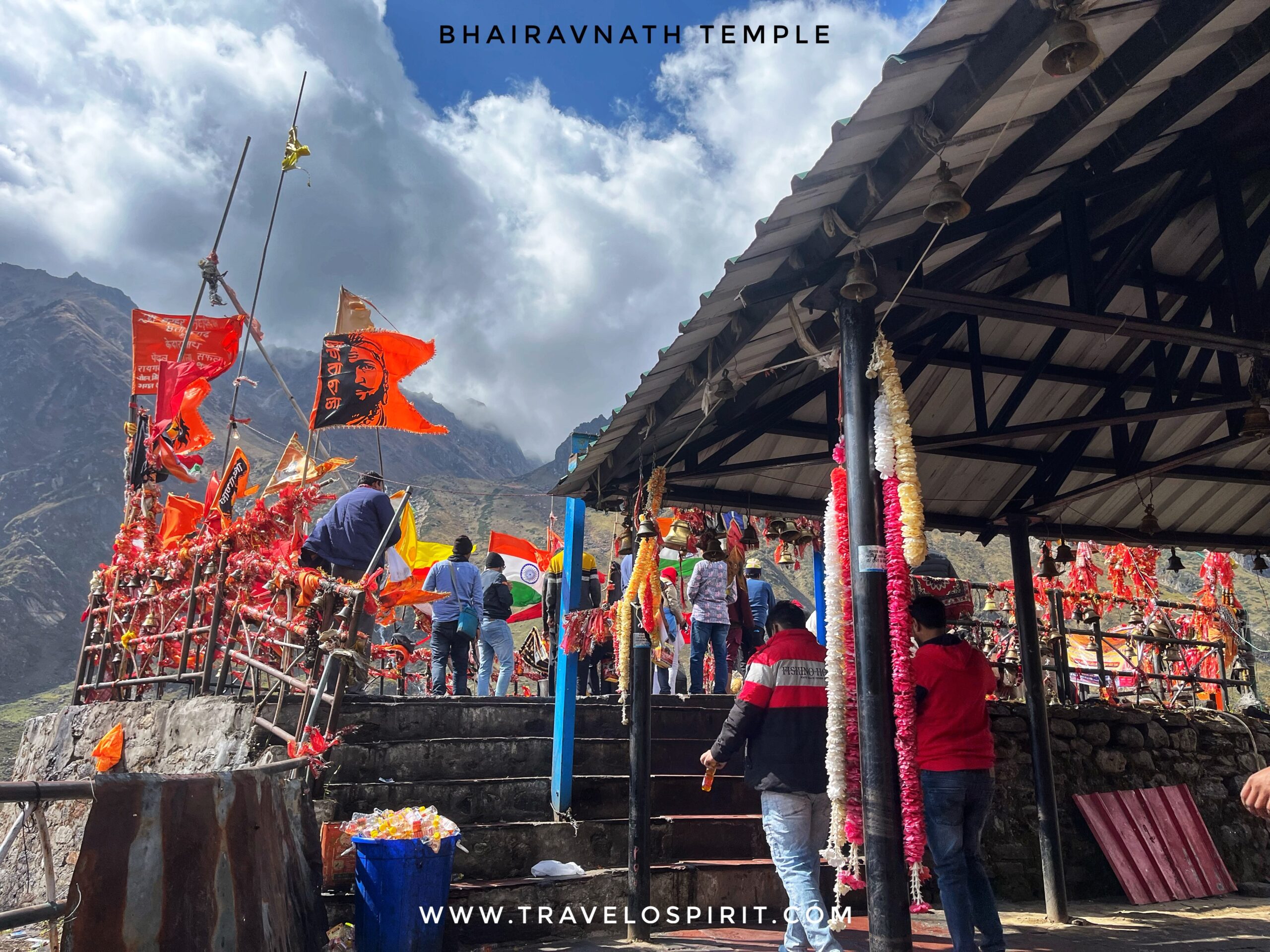
- Bhairavnath Temple (1.5km Trek)
- Gandhi Sarovar (3km Trek)
- Madhuganga Waterfall (2km Trek)
- Vasuki Tal (8km Trek)
Q 19. Is it mandatory to visit Bhairavnath Temple after Kedarnath Temple?
According to legend, Bhairavnath is the protector of the Kedarnath Temple, and your pilgrimage will not be complete until you visit it. It is approximately 1.5 kilometers away and can be reached in 20 to 30 minutes.
Q 20. Which SIM Card works in Kedarnath?
Jio and Airtel function well throughout every part of Uttarakhand, including trekking routes and temple grounds.
VI is generally satisfactory throughout Uttarakhand. After Guptkashi, the VI network is extremely weak, and there is no coverage along the trekking route. However, I found an impressively strong VI network close to the temple grounds.
Q 21. What food options are available in Kedarnath?
Beginning with Gaurikund, it is a market area with numerous restaurants to choose from.
During the trek, there are numerous shacks offering Maggi, Parathas, Dal Rice, Rajma Rice, Corn, Fruit Plate, Tea, Coffee, Energy Drinks, etc.
Popular in and around the Kedarnath premises is the ₹150 Dal Rice Plate. It consists of delicious Dal Rice, Chana Bhaji, and Soya Chunk Bhaji with Achhar. Do give it a shot.
Trekking is a difficult activity that requires sufficient stamina to continue for 8-14 hours. Keep consuming light meals every two to three hours, and most importantly, remain hydrated. Avoid consuming excessively heavy or unhealthy meals.
Q 22. What to carry on trek?
- Waterproof Trekking Shoe with good grip
- Wooden Stick (Kathi)
- Winter Jacket
- Thermal Set
- Woollen Gloves, Socks, Cap and Neck Warmer
- Raincoat (most important)
- Torch
- Personal Medicines and First Aid Kit
- Painkiller and Relispray
- Powerbank
- Water Bottle
- Glucon D / Energy Drink
- Cash
- Apple, dry fruits and Protein Bars
- Carry Kapoor and Ajwain tied together in a handkerchief and sniff it when you’re tired while trekking (very helpful).
- Bagpack – Keep your bag as light as possible because as you trek uphill, the bag starts feeling heavier and heavier.
Q 23. How to prepare yourself for the hike?
The Kedarnath trek is not a simple one; in fact, it is categorized as a moderately difficult trek, and completing it requires a high level of physical fitness. You should begin your training at least two to three months before the trip. Initially commence with walking daily for at least 4-5 km, increasing your speed every day. After two weeks, progress to jogging and running. This is even possible on a treadmill. Essentially, you need to improve your cardiovascular endurance, so you can choose any cardio exercise you like, such as jogging, running, cycling, swimming, or even climbing 20 floors of stairs and descending. Physical preparation is crucial, particularly if you have led a sedentary lifestyle for most of your life.
Q 24. How to maintain your motivation?
Because the entire 16-kilometer trek is uphill, it becomes extremely difficult and challenging at one point to keep going. It begins to feel as if the trek will never end. One kilometer begins to feel like three kilometers. At this point in your journey, the only thing keeps you going is your determination to reach Kedarnath Temple. Continue chanting the name of Lord Shiva; he will give you the courage to complete the trek. But at the same time also listen to your body, take enough rest. Continue refueling your energy level with energy drinks, fruits, and protein bars. If your body has truly given up and you can no longer trek, choose a pony or a basket. As stated previously, if you improve your fitness level prior to the trek, finishing the trek will not be difficult.
Author’s Note: Kedarnath is a pilgrimage site; only visit if you are a devout follower of Lord Shiva. Please do not visit it to create content for social media or to increase your views. Yatra is best accomplished on foot. Avoid using horses, palkis, and the basket. Give it your best effort and attempt to travel on foot as much as possible; if you feel that your body is unable to support you, and then only use horses, palki, or a basket. The trek is physically demanding even for fit adults, so imagine how challenging it would be for children. So, avoid taking children with you. Walk at a steady but comfortable pace, pay attention to your body, get sufficient rest, and most importantly, remain hydrated. Keep your negotiation skills on hand, as they will be of great assistance when booking a room in Kedarnath.
I hope you have a wonderful Yatra! 🙂
If you’ve been to Kedarnath and would like to share your experience, write to me at travelospirit@gmail.com. You can also contact me on my Instagram Pages @readysteadytravel_ig and @travelospirit.