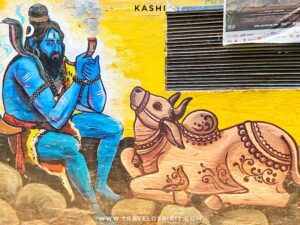
Mahadev. Shiva. The Exterminator of Evil. Although known by many titles, ultimately he is the Supreme Being. Hindus frequently hear the term “Jyotirlinga” during their childhood. Hindus hold Shiva’s Jyotirlinga in the highest regard. Lord Shiva is worshipped in the shape of a Jyotirlingam at shrines called Jyotirlinga. You might now be wondering what a Jyotirlingam is. It is The Almighty’s brilliant symbol. A Jyotirlinga is a sacred image of Lord Shiva. Jyoti and linga both refer to light and signs, respectively. Jyotirlinga is Lord Shiva’s brightness.
Legend:
The legend of “Jyotirlinga” finds its reference in Vishnu Purana. Once, Lord Vishnu and Lord Brahma were discussing who the Supreme One is. To settle the debate Lord Shiva created a massive pillar of light and instructed both Lord Vishnu and Lord Brahma to locate its ends. Lord Vishnu took his Varaha avatar whereas Lord Brahma rode a Swan to achieve this task. Lord Brahma lied that he had found the end, but Lord Vishnu conceded defeat. Lord Shiva then cursed Lord Brahma on his dishonesty, saying that despite being the universe’s creator, he would never be worshipped and Lord Vishnu for his honesty shall be worshipped in all his forms. The Jyotirlinga shrines at these 12 locations are believed to have emerged where Lord Shiva appeared as an illimitable light pillar.

The 12 Jyotirlinga in India:
In India, there are 12 Jyotirlinga. Because Lord Shiva is thought to have initially appeared on Earth during the Aridra Nakshatra, the Jyotirlinga is held in high regard. The Jyotirlingas do not have any distinctive features. Many believe that when you reach a great level of spiritual enlightenment, you can see these lingas as columns of fire piercing through the earth. Initially, there were 64 Jyotirlingas, but only 12 are regarded as being very auspicious and sacred. The 12 Jyotirlinga have taken the name of the presiding God. Each is regarded as a distinct avatar of Lord Shiva. The “lingam,” which symbolizes Lord Shiva’s limitless nature or the beginning and end of the stambh pillar, is the prime image of all these lingas.
The 12 Jyotirlinga are situated in India as follows:
- Somnath Jyotirlinga, Gir (Gujarat)
- Mallikarjuna Jyotirlinga, Srisailam (Andhra Pradesh)
- Mahakaleshwar Jyotirlinga, Ujjain (Madhya Pradesh)
- Omkareshwar Jyotirlinga, Khandwa (Madhya Pradesh)
- Baidyanath Jyotirlinga, Deoghar (Jharkhand)
- Ramanathaswamy Jyotirlinga, Rameshwaram, (Tamil Nadu)
- Bhimashankar Jyotirlinga (Maharashtra)
- Kashi Vishwanath Jyotirlinga, Varanasi (Uttar Pradesh)
- Nageshwar Jyotirling, Dwarka (Gujarat)
- Trimbakeshwar, Nasik (Maharashtra)
- Kedarnath Jyotirlinga, Rudraprayag (Uttarakhand)
- Ghrishneshwar Jyotirlinga, Aurangabad (Maharashtra)
1. Somnath Jyotirlinga, Gir (Gujarat)
The Somnath Temple in Gujarat, which is regarded as the first of the 12 Jyotirlingas, is located near Veraval in the Prabhas Kshetra of Kathiawad district. As per the Shiva Purana, the Moon was married to 27 daughters Daksha Prajapati, but amongst all, he loved Rohini the most. When Prajapati observed his disregard for his other wives, he cursed the Moon that he would lose all his brightness and luster and would go completely dark. The upset moon along with his wife Rohini went to Somnath and prayed the Sparsa Lingam. Lord Shiva after being impressed by the Moon blessed him to regain his lost beauty and radiance. At Moon’s request, Lord Shiva took the name of Somchandra and stayed there forever. He is now popular as Somnath. Since then, the Somnath Temple has been attacked, demolished, and rebuilt several times in history.
2. Mallikarjuna Jyotirlinga, Srisailam (Andhra Pradesh)
You will find Mallikarjuna on the Shri Shaila Mountain, on the banks of the Krishna River in the southern part of Andhra Pradesh. It is one of India’s largest Shaivite shrines and is also referred to as the “Kailash of the South”. At this temple, Mallikarjuna (Shiva) and Bhramaramba (Devi) serve as the presiding deities. As per Shiva Purana, Kartikeya was very upset because Lord Ganesha was married off before him and so he departed for Kraunch Mountain. All Gods tried their best to console Kartikeya but all in vain. Shiva and Parvati eventually made their way to the peak but were turned back by Kartikeya. After watching their son in such a state, Lord Shiva took the form of a Jyotirlinga and lived on the mountain, and is known by the name Mallikarujna. Arjuna is another name for Shiva, whereas Mallika refers to Parvati. As per legend, it is said that just seeing the tip of this mountain exempts one from sin and the cycle of life and death.
3. Mahakaleshwar Jyotirlinga, Ujjain (Madhya Pradesh)
The Mahakaleshwar Temple is situated near the Kshipra River in the deep Mahakal forest of Ujjain, Madhya Pradesh. The Jyotirling is an important shrine for pilgrimage not only in Madhya Pradesh but also all over India. There are various tales on how this Jyotirlinga came into existence. According to the Puranas, a five-year-old boy named Shrikar was mesmerized by the king of Ujjain’s devotion to Lord Shiva. Shrikar began worshiping a stone as Shiva. Even after numerous attempts by people to discourage him, his adherence kept growing. Impressed by Shrikar’s devotion, Lord Shiva in the form of Jyotirlinga took him home in the Mahakal Forest for eternity. In addition to being a Jyotirlinga, Mahakaleshwar Temple is also one of the seven “Mukti-Stals” or locations that can liberate a person.
4. Omkareshwar Jyotirlinga, Khandwa (Madhya Pradesh)
Omkareshwar Temple, situated on the Island called Shivapuri in the Narmada River, is considered one of the most sacred Jyotirlinga. The name is Omkareshwar signifies “Lord of Omkara” or “the Lord of the Om Sound”. According to Hindu mythology, there once was a great conflict between the Devas and Danavas (Gods and Demons), in which the Danavas ultimately prevailed. As a result, the Devas suffered a severe setback and began to pray to Lord Shiva. Impressed by their prayers, Lord Shiva manifested as Omkareshwar Jyotirlinga and defeated the Danavas. And hence, the Hindus hold this location in high regard.
5. Baidyanath Jyotirlinga, Deoghar (Jharkhand)
Vaijnath or Baidyanath are other names for the Vaidyanath Temple. It is situated at Deogarh in the Santal Parganas region of Jharkhand. One of the most revered Jyotirlinga, it is believed that genuine worship of the shrine frees one from all anxieties and suffering. Also, by worshiping this Jyotirlinga, one can achieve moksha or salvation. As per a well-known legend, the demon king Ravana prayed to Lord Shiva to visit Sri Lanka and grant it invincibility. Lord Shiva destroyed Mount Kailash as Ravana attempted to take it with him. In exchange for his penance, Ravana was granted one of the twelve Jyotirlingas, with the caveat that if he set it down on the ground, it would remain there for all of eternity. While on his way to Sri Lanka, Lord Varuna entered Ravana’s body, and he immediately felt the need to discharge himself. In the interim, Lord Vishnu in the guise of a little boy, offered to hold the lingam in the meantime. Lord Vishnu put the Lingam on the ground which got rooted to the location. As a penance, Ravana severed nine of his head as atonement. Shiva brought him back to life and attached his head to his body in the manner of a Vaidya, which lead to the name of this Jyotirlinga as Vaidyanath.
6. Bhimashankar Jyotirlinga (Maharashtra)
In the Sahyadri area of Pune, is where you may find the Bhimashankar Temple. Situated on the banks of River Bhima, also believe to be the source of this Bhima. The story surrounding this Jyotirlinga is linked to Bhima, son of Kumbhakarna. When Bhima discovered that he was the son of Kumbhakarana, who was destroyed by Lord Vishnu in his incarnation as Lord Ram, Bhima promised to take revenge on Lord Vishnu. He made atonement to appease Lord Brahma, who bestowed upon him great strength. After attaining this power, he started wreaking devastation on the planet. He subdued Kamrupeshwar, a fervent follower of Lord Shiva, and imprisoned him. The Gods were enraged by this and asked Lord Shiva to come down to Earth and eliminate this oppression. Following a battle between the two, Shiva destroyed the demon. Lord Shiva was then asked by all the Gods to settle there. Bhimashankar Jyotirlinga is a manifestation of Lord Shiva. The Bhima River is thought to have been created by the sweat that spilled from Lord Shiva’s body after the battle.
7. Ramanathaswamy Jyotirlinga, Rameshwaram, (Tamil Nadu)
The southernmost of the 12 Jyotirlinga, Rameshwar Temple is situated on the island of Rameshwaram, off the Sethu coast of Tamil Nadu. This temple is well-known for its architecture, particularly the 36 theerthams, towers, and lengthy, intricate hallways. This has long been a revered pilgrimage site, and many people compare it to Banaras. Ramayana and Ram’s triumphant return from Sri Lanka are strongly related to this Jyotirlinga. Ram is said to have halted in Rameshwaram on his journey to Sri Lanka and was sipping water from the sea when a celestial voice said, “You are drinking water without worshipping me.” In response to this, Ram created a sand lingam and worshiped it, and asked to help in defeating Ravana. He received Lord Shiva’s blessings, who took the form of Jyotirlinga and remained there for eternity.
8. Kashi Vishwanath Jyotirlinga, Varanasi (Uttar Pradesh)
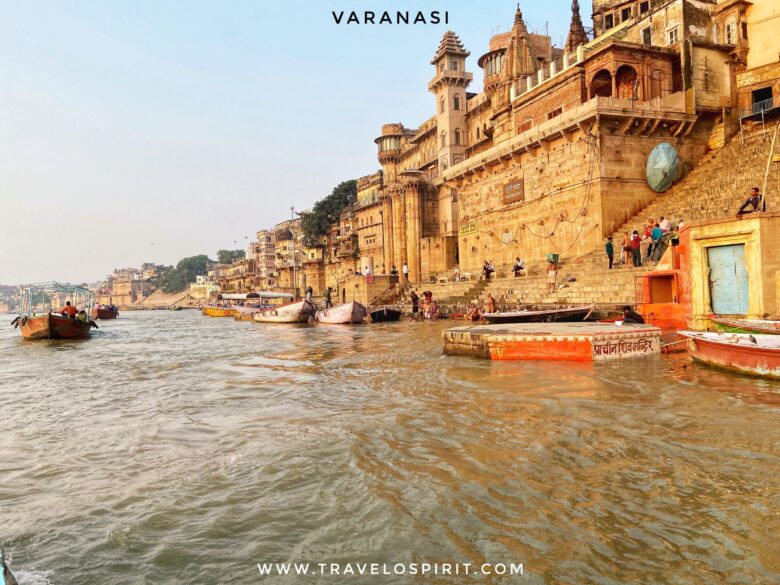
Kashi, the most venerated place in the world, is where you’ll find the Kashi Vishwanath Temple. It is located in the bustling streets of the holy city of Banaras (Varanasi). More than the Ghats and River Ganga of Varanasi, the Shivalinga continues to be the center of pilgrims’ devout attention. As per the legends, it is believed that this was the first Jyotirlinga to have manifested its superiority over other gods, pierced the earth’s crust, and blazed upward toward Heaven. The locals think that individuals who die here are liberated because it is said that this temple is dearest to Lord Shiva. Many people think that Shiva, who bestows happiness and freedom, lived here. Although this temple has been renovated numerous times, its primary significance has never changed.
9. Nageshwar Jyotirling, Dwarka (Gujarat)
The Nagnath Temple, often referred to as the Nageshwar Temple, is situated between Gomati Dwarka and the Bait Dwarka Island on the Saurashtra coast of Gujarat. This Jyotirlinga is very significant because it represents protection from all poisons. People who pray at this temple are said to become poison-free. According to the Shiva Purana, the demon Daaruka kidnapped Supriya, a devotee of Shiva. She was held captive by the demon in Daarukavana, the city that served as his capital. Supriya told all of the inmates to chant “Aum Namaha Shivaya”, which infuriated Daaruka, who rushed to assassinate Supriya. Just then Lord Shiva appeared in front of him and killed him. As a result, the Nageshwar Jyotirlinga came into existence.
10. Trimbakeshwar, Nasik (Maharashtra)
About 30 kilometers from Nasik, you will find Trimbakeshwar Temple which is situated next to the Brahmagiri Mountain, where the Godavari River runs. This temple is thought to be the source of the River Godavari, also known as the “Gautami Ganga” and is the most revered river in South India. The Shiva Purana states that Shiva chose to settle here and took the name Trimbakeshwar at the fervent request of the River Godavari, Gautam Rishi, and all the other Gods. Varuna granted Gautam Rishi a blessing in the form of a pit, from which he drew an endless supply of food and grains. This made the other Gods envious, so they sent a cow to break into the granary. Gautam Rishi accidentally slaughtered the cow, therefore he prayed to Lord Shiva to do something to purify the area. Shiva commanded Ganga to purify the earth by flowing through it. Thus, everyone praised the Lord, who then lived next to Ganga as Trimbakeshwar Jyotirlinga. As per Hinduism, this Jyotirlinga fulfills everyone’s wishes.
11. Kedarnath Jyotirlinga, Rudraprayag (Uttarakhand)
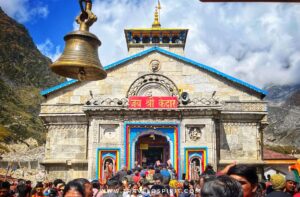
The Kedarnath Temple is the northernmost Jyotirling and is one of the sacred pilgrimage sites in India. It is situated on a mountain called Kedar at a height of 12000 feet in the Rudra Himalayan Range. It is about 123km from Haridwar. Since the temple is situated at a very high altitude, it is open only for 6 months in a year as the rest 6 months it not accessible due to heavy snowfall. It is customary for pilgrims traveling to Kedarnath to first stop at Yamunotri and Gangotri before bringing holy water to Kedarnath for worship. As per one of the legends, Lord Shiva settled permanently in Kedarnath in the form of this Jyotirlinga after being impressed with the severe penance of the Nara and Narayana, the incarnations of Lord Vishnu. As per another legend, the Pandavas after the Battle of Kurukshetra, wanted to seek Lord Shiva’s blessing and compensate for the sin they committed by killing their own in the battle. But Lord Shiva wanted to avoid the meeting and escaped taking the form of a Bull but found himself surrounded by the Pandavas at Kedarnath. However, Lord Shiva then vanished into the ground with only his hump on the surface which is now worshipped at Kedarnath Temple. People firmly believe that by praying at this location, one can fulfill all of their desires.
12. Ghrishneshwar Jyotirlinga, Aurangabad (Maharashtra)
The Ghrishneshwar Jyotirlinga may be found at Verul, a village in Maharashtra 20 kilometers from Daulatabad and close to Aurangabad. The well-known Ajanta and Ellora caves are located close to this temple. This temple was constructed by Ahilyabai Holkar, who had also renovated the Kashi Vishwanath Temple in Varanasi. Other names for the Ghrishneshwar temple are Kusumeswarar, Ghushmeswara, Grushmeswara, and Grishneswara. As per Shiva Purana, the Devagiri Mountain was home to a couple by the names of Sudharm and Sudeha. Since they were without children, Sudeha arranged for Sudharm to marry her sister Ghushma. They had a boy which made Sudeha envious of her sister. Out of jealousy, Sudeha threw the son into the lake where Ghushma once released 101 lingams. Pleased by Ghushma’s prayers, Lord Shiva returned her son and also informed her of her sister’s actions. Sudharm asked Lord Shiva to set free Sudeha. Pleased by Sudharm’s kindness and on his request, Lord Shiva took the name Ghushmeshwar and appeared in the world as the Jyotirlinga.